Showing posts with label Crestmont Garden. Show all posts

Monday, June 23, 2014

Nightmares of Bindweed


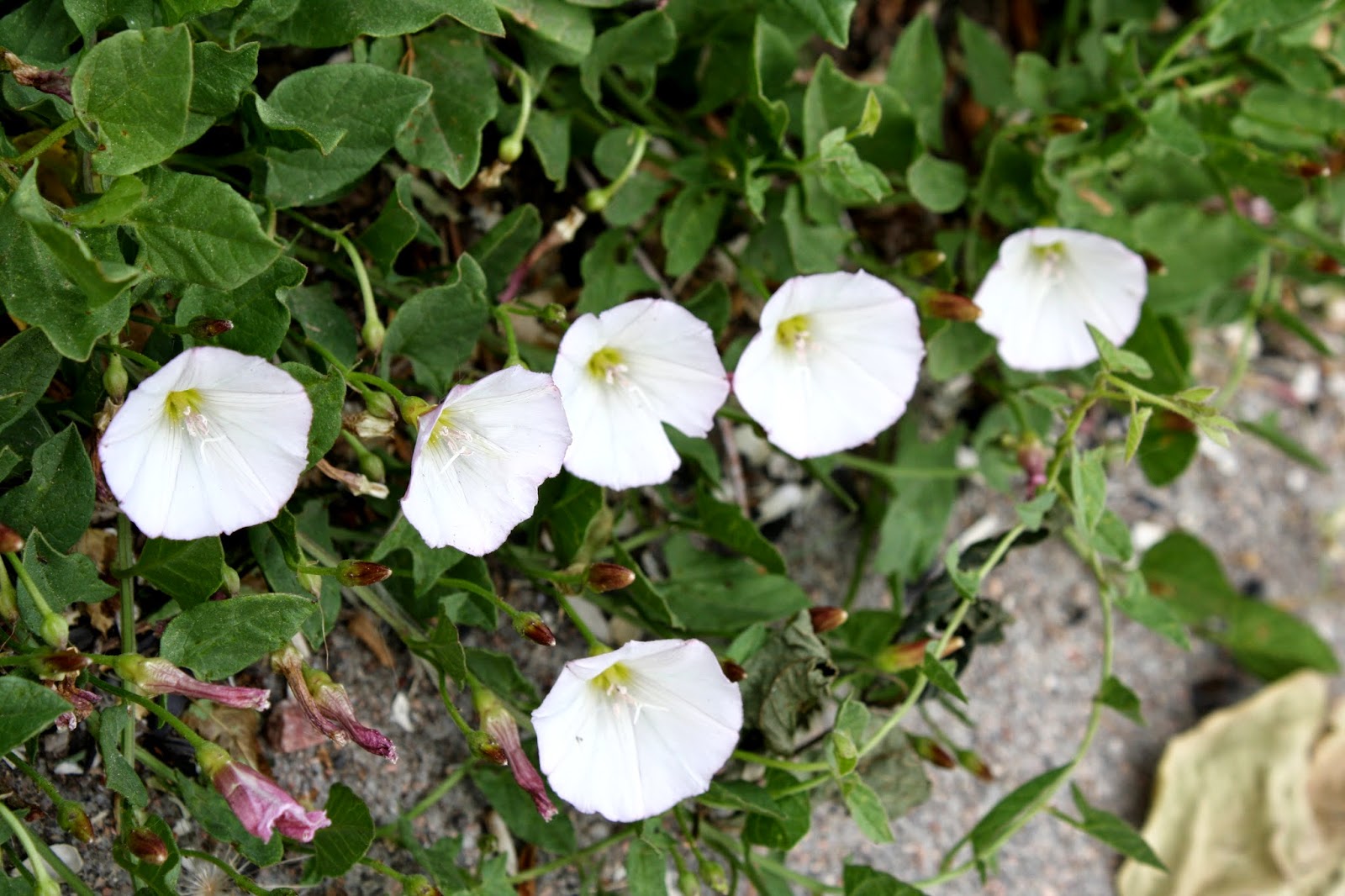
When I first started working in the Hub gardens, I was unfamiliar with bindweed. As the weeks progressed, I heard numerous cautionary tales about this common vining plant, but we were so busy planting that the weeds were largely overlooked and bindweed remained just a mythological garden villain. Until… IT FLOWERED.


Once it flowered, it could no longer be ignored. While I was foolishly mooning over what I saw as beautiful Morning Glory−like flowers, the more seasoned gardeners saw it for what it was…. a garden emergency! Bindweed is an aggressive self-seeder and the appearance of these flowers means the bindweed is well on its way to doing just that. Since bindweed is so very difficult to eradicate due to its extreme hardiness and extensive root system (reaching up to 20ft!), it is very important to pull the plant before it gets to this point. Since the roots reach so deep, it is impossible to pull the plant without breakage, and broken bindweed root will simply propagate more bindweed! With this in mind, you can surely imagine what tilling a plot of bindweed would do. The tiller will chop up the bindweed root well enough, but that’s the last thing you want to do! Tilling a plot of bindweed will just lead to more bindweed. A truly vicious cycle!
What I once saw as just your average garden weed became Garden Enemy #1. Everywhere I looked: BINDWEED – choking the strawberries, climbing the fence, stalking the raspberry bushes and, I swear, even making a grab for my feet! Those once “beautiful” white flowers began haunting me, and I began diving for white moths in midair, mistaking them for airborne bindweed flowers! I may have briefly lost my mind but I had found my calling: bindweed eradication.
Pulling the top growth is the first step in ridding yourself of this prolific weed. Though, keep in mind that doing this just once won’t enough to get rid of it – remember those broken roots will simply produce more bindweed! Eventually though, removing the top growth will starve the plant because without the green leaves to soak up sunshine, it will be unable to photosynthesize. But even without top growth, bindweed can survive on its stored energy for quite some time. Laying down a barrier such as cardboard over the thoroughly weeded area and topping it with mulch will further hamper bindweed’s aggressive spread. It is also crucial to keep your pulled bindweed out of the compost, where it would certainly set roots and begin the vicious cycle again. Bag it up in a trash bag and get rid of it with your other waste.
 Granted, it will take a few years of fierce vigilance for this method to work. And while that may seem daunting, I can personally testify that battling bindweed can be quite a cathartic experience…and surprisingly addicting. And while after a long day of bindweed pulling you may feel like you’ve got it under control, don’t let your guard down… because the bindweed’ll getcha if you don’t watch out! -Erika Wheeler, Garden Intern


Wednesday, June 27, 2012

A Compost Tale: Interning in the Garden with the Hub

I began working as a garden intern with MHC this past January when I was assigned command of the Hub’s compost bins at the Crestmont garden. Its been a crazy, smelly, and magical journey since then and I want to tell you all about it!!
Since January Haley (a Hub volunteer) and I have been taking turns riding in the idiosyncratic trucks of compost volunteers Jay and Tom, picking up food waste from Mother Hubbard’s Cupboard’s pantry and two local businesses, the Village Deli and Soma/Laughing Planet.

When our journey began we were in the depths of a fairly mild winter, so most of the food we were dumping and digging into was in varying states of frozen. It seemed as if the layers of coffee grounds, stale bread, rotting greens, and overripe berries were determined to maintain their state of being, never surrendering to the natural process of decomposition that makes compost magic.However, once spring came and the ground began to thaw the compost bins finally began to awaken. What was once dead became alive as the microorganisms, worms, and other critters began to break down the food waste with the help of the oxygen introduced to the process through the turning done by interns and volunteers. As excited as we were that our compost was maturing, we were very disturbed by the putrid stench it released when turned. IT WAS RANK. One of our interns actually started dry-heaving while turning the compost; others chose to wear bandanas over their faces to mask the stench. There was no love to be found for our beloved infant compost.

As the intern in charge of compost, I felt responsible for the misery and was frankly embarrassed that I raised such smelly compost! I immediately began doing research and developed a trifecta approach to solving the stench. A) Before adding things to the compost pile, I would, with the help of Jay, Tom, and other volunteers, chop all of the food waste into smaller pieces with a shovel to encourage quicker decomposition. B) Intersperse the bread waste among the layers of compost so it was better mixed with the other food waste (because it is so highly processed, bread is particularly difficult to compost). C) Make sure the compost is turned at least once a week.

The test came when we had to remove the compost from the old bins so that the city could tear them down and replace them with fresh wood (the wood in the old bins was rotting). Several layers of unfinished and semi-finished compost were spread on the garden beds as sheet mulch as well as in piles for the new bins. Miraculously, it DIDN'T SMELL AWFUL!! It actually smelled pretty good (as good as rotting food can, anyway). The real treat came when we got to the bottom of one of the first compost bins I ever added to. Sitting among all the spiders, worms, and rollypoly bugs, there was a mound of matter that was a deeper brown than the rest. After a moment of breathless awe, I picked it up, felt it in my hands, smelled it, and danced around like a new parent. It was finished compost, some of the healthiest soil on the planet. It had the texture of clay mixed with fine sand and smelled just like freshly tilled dirt. The compost had reached the end of its journey and it was BEAUTIFUL. I kept a bit of it in a tiny mason jar that I keep in my room to remind me of the journey and humanity’s ability to responsibly deal with our waste, giving it back to the earth like an offering of gratitude for providing life.

~Jessica Sobocinski