Showing posts with label gardening. Show all posts

Monday, June 23, 2014

Nightmares of Bindweed


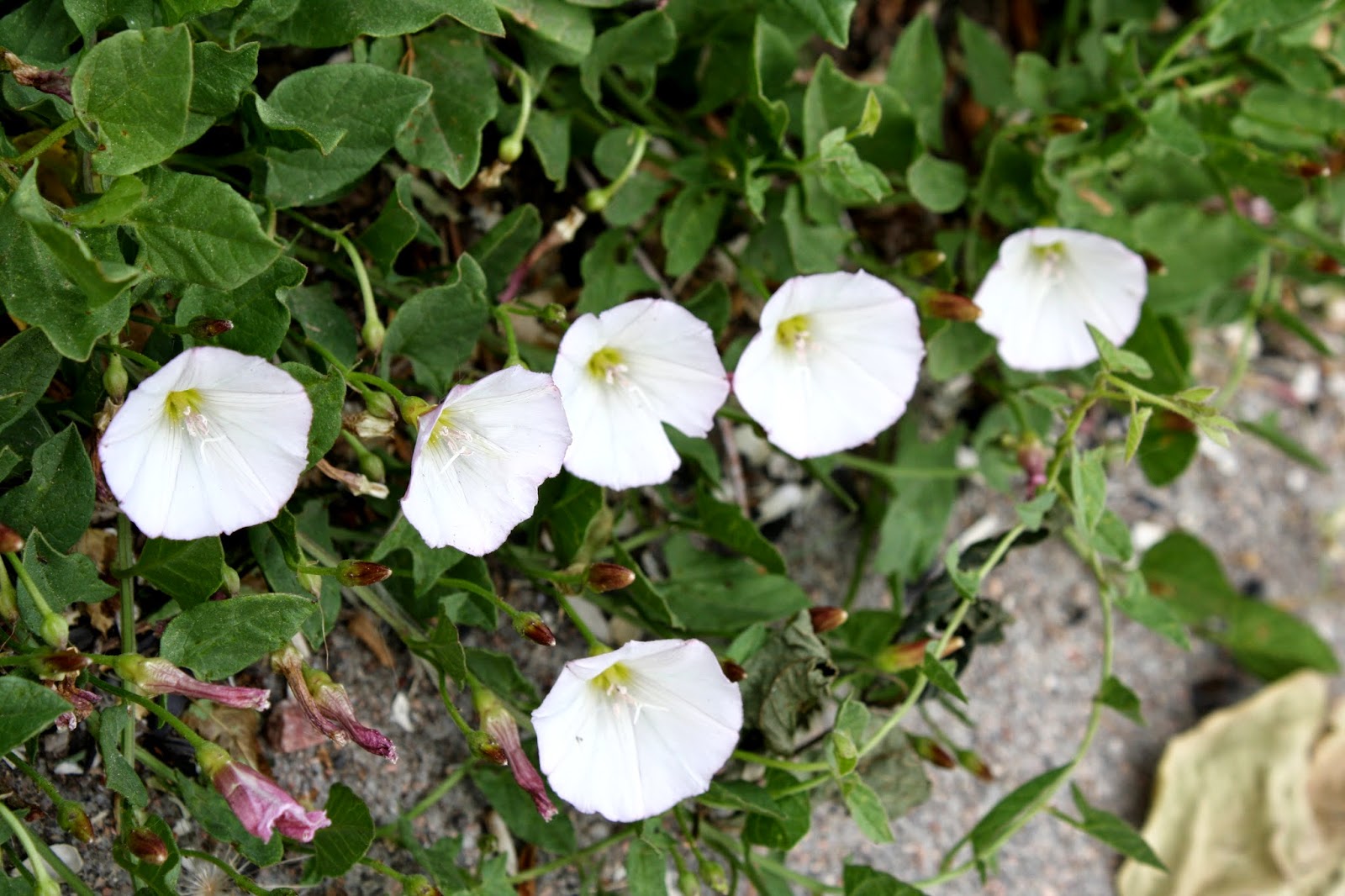
When I first started working in the Hub gardens, I was unfamiliar with bindweed. As the weeks progressed, I heard numerous cautionary tales about this common vining plant, but we were so busy planting that the weeds were largely overlooked and bindweed remained just a mythological garden villain. Until… IT FLOWERED.


Once it flowered, it could no longer be ignored. While I was foolishly mooning over what I saw as beautiful Morning Glory−like flowers, the more seasoned gardeners saw it for what it was…. a garden emergency! Bindweed is an aggressive self-seeder and the appearance of these flowers means the bindweed is well on its way to doing just that. Since bindweed is so very difficult to eradicate due to its extreme hardiness and extensive root system (reaching up to 20ft!), it is very important to pull the plant before it gets to this point. Since the roots reach so deep, it is impossible to pull the plant without breakage, and broken bindweed root will simply propagate more bindweed! With this in mind, you can surely imagine what tilling a plot of bindweed would do. The tiller will chop up the bindweed root well enough, but that’s the last thing you want to do! Tilling a plot of bindweed will just lead to more bindweed. A truly vicious cycle!
What I once saw as just your average garden weed became Garden Enemy #1. Everywhere I looked: BINDWEED – choking the strawberries, climbing the fence, stalking the raspberry bushes and, I swear, even making a grab for my feet! Those once “beautiful” white flowers began haunting me, and I began diving for white moths in midair, mistaking them for airborne bindweed flowers! I may have briefly lost my mind but I had found my calling: bindweed eradication.
Pulling the top growth is the first step in ridding yourself of this prolific weed. Though, keep in mind that doing this just once won’t enough to get rid of it – remember those broken roots will simply produce more bindweed! Eventually though, removing the top growth will starve the plant because without the green leaves to soak up sunshine, it will be unable to photosynthesize. But even without top growth, bindweed can survive on its stored energy for quite some time. Laying down a barrier such as cardboard over the thoroughly weeded area and topping it with mulch will further hamper bindweed’s aggressive spread. It is also crucial to keep your pulled bindweed out of the compost, where it would certainly set roots and begin the vicious cycle again. Bag it up in a trash bag and get rid of it with your other waste.
 Granted, it will take a few years of fierce vigilance for this method to work. And while that may seem daunting, I can personally testify that battling bindweed can be quite a cathartic experience…and surprisingly addicting. And while after a long day of bindweed pulling you may feel like you’ve got it under control, don’t let your guard down… because the bindweed’ll getcha if you don’t watch out! -Erika Wheeler, Garden Intern


Friday, June 13, 2014

Herb Gardening with the Hub


This June, the Hub offered our annual Herb Gardening workshop.  We were thrilled to show off the many herbs on site at MHC, and to offer participants cuttings of oregano, pineapple sage, thyme, and mint, as well as divisions of our comfrey and chive plants to grow at home.  We covered the basics of planting, tending and propagating herbs, as well as discussing the many uses of garden herbs.  Here are some of the highlights from the workshop:

Cooking with Herbs
We started the class with a tasting of pesto pasta, one of our favorite Hub meals using fresh herbs from the garden.  See our pesto recipes here.  We talked about the many delicious uses of herbs we can grow and cook with, and a few participants had attended our recent Pie for Dinner workshop, and were excited to grow Herbs de Provence to bake the Provencal Tart with Gruyere and Herbs.  The Herbs de Provence mix includes basil, fennel seed, lavender, marjoram, rosemary, sage, summer savory, and thyme, all herbs that grow well in our part of Indiana.    

Growing Herbs
Herbs are a great entry point to gardening, and most of the class participants were interested in starting small containers of herbs either on a windowsill or on a porch.  We discussed the basics of container gardening, including offering adequate drainage, sun exposure, and watering.  See our container gardening handout here.  We also discussed the plant families of common herbs, and their growing habits and needs.  We discussed the growing habits of mint family plants in particular, as all the cuttings participants were bringing home were from the mint family.  One tip that was a workshop favorite was to save eggshells and spent coffee grounds to add to herb containers and offer plants a nutrient boost.

Mother Hubbard’s Cupboard Garden Tour
We took a tour around the Mother Hubbard’s Cupboard garden, identifying herbs and talking about their growing needs and uses.  We took a longer look at the MHC Herb Spiral, a permaculture inspired planting design that offers multiple microclimates for herbs.   The Hub garden has a wide variety of herbs, from cooking herbs like rosemary and tarragon to those used medicinally like calendula and comfrey.  Comfrey is one of our favorite herbs at MHC.  We grow it in all 4 of our community gardens and use it as a mulch or ferment it into a fertilizer.  Join us during our open garden volunteer hours to learn more about the Hub’s herbs and their essential role in our community gardens.

Friday, September 7, 2012

Building Soil for a Healthy Harvest


This week MHC garden volunteers pulled together gorgeous harvests for the food pantry and bike cart.  We collected ripe, nearly bursting cherry, Roma, and Green Zebra tomatoes, large red and orange bell peppers, red and green velvety okra, Swiss chard, basil, thyme, and tarragon, cucumbers, and handfuls of banana peppers.
It takes an incredible team of knowledgeable garden volunteers, newbie garden volunteers bursting with energy, youth gardeners full of curiosity, and a community of supporters to make that harvest possible.  It also takes the use of many trusty sustainable gardening techniques to build healthy soil and grow such robust plants.  Over the years, many gardeners have shaped the methods used to make the community gardens so successful.  In today’s blog we’ll talk about the central sustainable gardening technique we use to keep our soil healthy and our harvests bountiful, recycling organic matter from the garden and food pantry to build the soil in the community gardens.
Growing food truly does start with the soil, and the Hub builds garden soil through packing it full of organic matter.  MHC’s most plentiful input of organic matter is hauled by trusty compost volunteers, who mix rotting fruits and veggies from the food pantry with leaves or straw in compost bins and turn it into a rich, organic soil amendment you may know as compost.  Winter and spring compost intern, Jessica Sobocinski, goes into more detail about this process in an earlier bog post.  Check it out for more information.
We also add organic matter directly onto open beds in the form of sheet mulching, also called lasagna gardening.  When sheet mulching we begin with a layer of cardboard or newspaper laid directly on top of the soil.  We then continue layering whatever organic matter we have on hand. Here are some examples of what we might add into a sheet mulched bed in the garden:
  • Leaves
  • Manure donated from a local farmer
  • Compost from our pile
  • Comfrey leaves
  • Rotting fruits and veggies from the food pantry
  • Straw
  • Chopped up plant matter from plants that are finished producing in the garden (ex. old corn stalks)
  • Chopped up garden waste (ex. weeds that aren’t seeding and won’t propagate from their roots)
We let the sheet mulched bed break down until we have a bed full of dark soil ready for planting.
MHC community gardeners recycle all the organic matter we can get our hands on, from the pantry and gardens, whether it be cardboard, paper, vegetable matter, or plant matter, and turn it into healthy and fruitful soil!  We encourage all in the Hub community to do the same, save your vegetable scraps in order to make broth, feed your chickens, sheet mulch your garden or add to your compost.  Recycling organic matter builds soil and is good for the environment and your budget.  Keep up with the MHC blog to learn about more techniques we use to keep our community gardens thriving!
–Stephanie