Kids Cook happens on Tuesdays and Thursdays, from 4:15-5:00. These hands-on, drop-in cooking sessions feature simple dishes, including seasonal foods, plus garden to table education.
Friday, October 30, 2015
Kids Make Autumnal Spaghetti Sauce
It's winter squash season here at The Hub, so we're getting creative with the Acorn and Butternuts. Yesterday in Kids Cook we roasted acorn squash and puréed it in a food mill for a silky smooth pasta sauce seasoned with garlic and sage. Check out the recipe for this surprisingly simple and comforting dish.
Wednesday, September 30, 2015
Changes in the Hub Community Gardens
As the season changes from summer to fall, we at the Hub are also entering a season of transition.
Beginning in winter of 2015, Mother Hubbard’s Cupboard will no longer steward the City of Bloomington Parks and Recreation’s Banneker Green Thumbs and Crestmont Community Gardens. MHC will complete the garden season in early November 2015 and then transition out of both sites. MHC will stay active in the Crestmont neighborhood by working with the Crestmont Boys and Girls Club and the Bloomington Housing Authority to offer gardening education. MHC will continue gardening at the Butler Park Community Garden in 2016.
What will happen in the Crestmont Neighborhood next season?
During the 2016 garden season MHC will offer a bike cart in the Crestmont neighborhood with produce from the Butler Garden, a Container Gardening workshop with the Housing Authority, and will continue to partner with the Crestmont Boys and Girls Club. By 2017 we hope to have a new, more accessible garden site in the Crestmont neighborhood.
Why are these changes happening?
The reasoning behind the changes are twofold, program impact and resources.
- Our on-site community gardens at 1100 W. Allen St. are having immediate, daily impact on patrons and there is even more potential for growth. MHC’s off site gardens were developed over many years out of necessity, as MHC didn’t have land adjacent to the pantry. The success of the onsite garden indicates this is the best method for engaging a large number of patrons in gardening.
- We have heard through surveys and word of mouth that the model of community gardening at Crestmont is not accessible. Patrons either cannot physically access the garden site or feel unsafe doing so.
- Crestmont requires a great deal of staff time to manage and the growing conditions, specifically the invasive bindweed issue, are becoming insurmountable.
- Banneker, while relatively easy to manage, is becoming more and more shaded each year, greatly limiting what we can grow.
- MHC is facing the reality of limited resources for education programs and needs to prioritize those areas where we have the greatest impact. Transitioning out of some of our off-site programming will free up resources to expand our impact in the on-site gardens.
What is going to happen to the Banneker and Crestmont sites?
The sites will go back into the care of the City of Bloomington Parks and Recreation. Parks will continue gardening on a smaller scale with 2 raised beds in the Banneker Garden. Parks plans to convert the Crestmont garden back to open green space within the year. Questions about the future of the Crestmont and Banneker Gardens can be directed to the City of Bloomington’s Parks and Recreation Department. To learn more about the future of the Mother Hubbard’s Cupboard Community Gardens, contact us!
Tuesday, September 29, 2015
Love Bugs!
Hi, my name is Jennifer and I recently got acquainted with MHC through a service learning project offered through a class (L350) that I'm currently taking at Indiana University. I've heard about MHC before through friends who've volunteered there and through my church but never really had any hands on volunteering experience there myself. I knew I would be helping out at the gardens but other than that I didn't really know what to expect. I imagined some weeding, some pruning, and some planting, but never in my wildest dreams would I have ever imagined the best part of volunteering at MHC would be the bugs! No, that isn't a typo, I'm actually really excited about the different insects I've encountered at the gardens, and I've ended up taking some home to keep as bug-pets!
There was a swallow tail caterpillar in the mason jar that I found on a dill herb plant right in front of the MHC building while I was weeding! The really neat thing about these caterpillars is that if they feel threatened at all (or if you gently poke/squeeze them by the head) they will shoot out these bright orange antennas that not only help them look more scary than they actually are but also emit this sweet smelling odor as to warn potential predators to stay away! These caterpillars love to munch on fresh dill, carrots and parsley, and they turn into gorgeous butterflies!
I have also found some other unique and interesting bugs like grasshoppers, bees, and crickets that I just admired and left at the gardens. At the butler garden Kendra actually found a horn worm feasting on a pepper plant which she gladly handed over to me to take home! Even though they are called horn worms (the horn being the spiky thing located on their body), they actually resemble more of a caterpillar than a worm and end up turning into a large brown moth. They are notorious for eating a lot of plant material like tomato plants, pepper plants, and even rutabaga plants in a very short amount of time! They are often deeply camouflaged and can be hard to find; many times you will see their ginormous droppings before spotting the actual hornworms themselves! Kendra told me sometimes people think deer or rabbits completely ate up a garden when in reality it was actually these pint sized pests! They are living proof that you should never underestimate anything (especially this little bug) by its small size!
Finally there was this praying mantis that I found wandering on a corn stalk. It was camouflaged against the plant and was hard to locate at first. Don't underestimate these little guys as well as they can run/jump/even fly pretty fast! This one I would say is a teenager simply due to its size. Those can get pretty big (maybe double this one's size if not a little bigger) and are much more intimidating! If it were an adult I don't think I would have been able to catch it or hold it (especially without gloves)! Their little arms have spikes that pinch and hold their prey! As babies and teenagers they are still not as large or sharp so if they do feel threatened by you and end up pinching your finger or hand it just feels like a small prick; not a lot of pain at all. The adults on the other hand, with the fully developed spikes are even scary for me (a self-proclaimed bug lover) because those spikes are larger and definitely hurt more if they pinch you! Usually the adults I admire from afar and leave them be! They are also harder to catch because their wings are duly developed so they can fly away easily and quickly and with the youngsters their immature wings don't help them escape much! They rely more on their legs for jumping and running!
Don't get me wrong, gardening and harvesting have been a lot of fun here at MHC, but I still think finding such unique bugs take the cake! I've met a lot of new friends here as well (some who share my bug longing passion, others respectfully admire from afar) and I can't wait to continue my gardening and bug finding adventures! If you come out to volunteer Monday's or Wednesday's you just might find me (with high probability) deep in the gardens bug catching! :)
Tuesday, July 28, 2015
A Plot of Community Food Security: one patron’s story
Here at the Hub we’re always encouraging folks to grow food
at home, or in community gardens. We provide education and tools for gardening
in our workshops and tool share program. We also promote the benefits of home
food preservation, to extend the harvest beyond the growing season and into the
winter months. One of MHC’s patrons, Pearl Patton, is doing just that.
![]() |
| Pearl and Carl in front of the giant bed of beans in Pearl's garden. |
![]() |
| A few of the jars of beans Pearl has already pressure canned this summer. |
With the help of friends, family and neighbors, Pearl, age
72, planted the plot next to her house with corn,
potatoes, tomatoes, zucchini, cucumber, two varieties of bush beans, and cabbage. Last week she called on her community to help
with the snap bean harvest, and has already canned thirty-five quarts with
several pairs of hands picking and prepping.
She shares the food with her helpers and has donated beans to the MHC Food Pantry
through the Plant a Row for the Hungry program.
Pearl is retired from 24 years at the Westinghouse plant in
Bloomington.
“Those capacitors weigh a hundred pounds. I only weighed
one-fifteen,” Pearl reminisces.
She says this is the first year she has planted the whole length
of the plot since she gardened with her husband and children many years
ago. She says the high food prices last
winter inspired her to expand from the quarter-plot she had been tending in
recent years. Her housemate Gordon helped plant the garden and is keeping up
with the weeds. Carl, who proxy-shops at the Hub for Pearl each week, spent the
day picking beans with her last Saturday. “I’d say we picked twenty gallons, and there’s still more coming,” Carl remarked,
shaking his head,
“that’s a lot of beans!”
“I grew up on a 321
acre farm near Harrodsburg. You had to work or go hungry,” she remembers.
“One time I got the measles and had to stay home from school. My dad said ‘oh good, we got three hundred pounds of taters to plant.’“ Pearl recalls that being out in the early May sun made her measles itch more, but her dad told her, “don’t stop to scratch, keep droppin’ taters.” The next day she still itched, but decided she’d rather go to school.
Pearl expects to harvest “a truckload” of cucumbers, and plans to donate a portion of those to MHC, as well as any other excess produce she doesn’t put up or give away. Pearl’s garden is a good reminder that building community food security isn’t rocket science, it’s just good ol’ fashioned common sense.
Monday, July 13, 2015
For the Love of Beets
Ahhh, Summer at The Hub...garden produce abounds in the food pantry, and the black pop-up crates filled with lovely vegetables from the Hoosier Hills Food Bank Garden begin rolling in. In recent weeks the featured veggie has been beets! Those deep purple globes inspire responses on both extremes; you either love 'em or you hate 'em. I happen to be on the positive end of the spectrum, especially this season. I just can't get enough of that that rich, earthy taste. Beets are one vegetable best enjoyed fresh from the garden. I have been told this is because as soon as they are harvested, their sugars begin to convert to starches, so the closer you are to the moment of harvest, the sweeter the beet. I can't find verification for this, other than my own taste buds. A freshly pulled beet, steamed or roasted within hours of harvest, is like nothing else on this earth.
In our newest weekly drop-in cooking
demonstration, Kids Cook, we had a chance to sample this garden fresh sweetness in a colorful Beet Hummus dip. We oven-roasted the beets beforehand, covered with foil. Once they are fork-tender, the peels slip off easily. The kids helped pile all the ingredients into the bowl of the food processor, and we whirred away until the dip became smooth and creamy. Most exciting was the color! Several of our helpers were wearing some shade of pink on their clothes, and we had fun comparing, looking for the best match to the beet hummus. The lemon zest brightens the flavor, to match the color.
Tuesday, June 30, 2015
3 Simple Ways to Trellis Tomato Plants
If you made a list of all the wonderful vegetables you can grow, tomatoes would surely find themselves a place near the top of the list. Unfortunately, they would also fall close to the top on a list of plants that need lots of care and love while growing.
Given their vining structure, tomato plants can quickly become a mess if left to fend for themselves. Lying on the ground can lead to disease, rotting fruits, and pesky pests eating your tomatoes. Luckily, there's an easy fix - trellising!
This simple process helps your plants stand up straight while they grow, making them healthier and more manageable. Here are three simple ways to trellis tomato plants...

1. The first method is simply to use a stake to prop the plant up. Any t-post, wooden stake, or tall bamboo stalk will work - so long as it's sturdy!
To use this method, drive your stake into the ground far enough down that it feels steady when you lightly push it. Then loosely tie the tomato to the stake. While you want the tomato to be held sturdily up, the ties should also be loose enough that while the tomatoes continue to grow, they aren't constricted by the string.

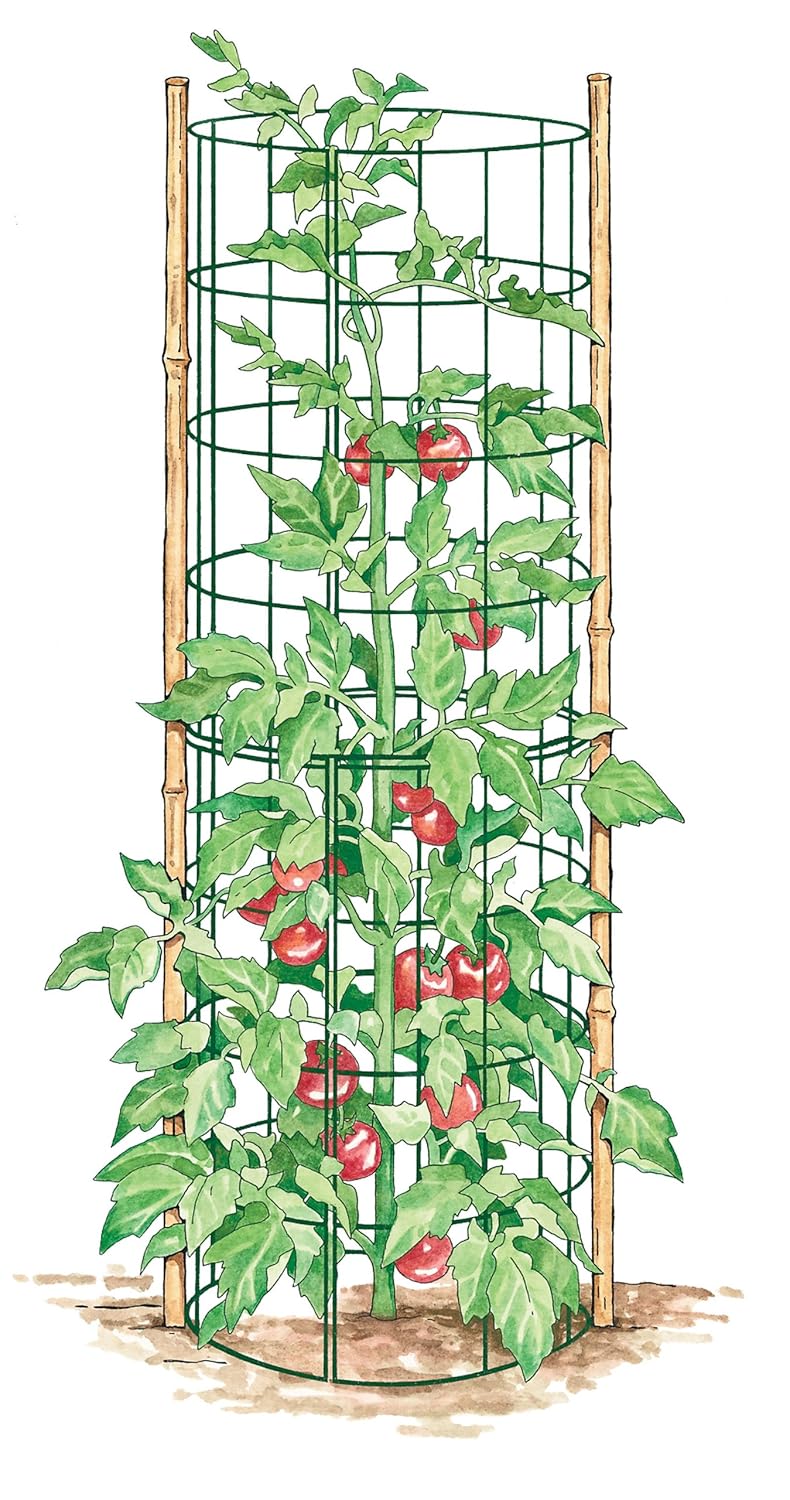
2. The second option is to use a tomato cage. These cages come in many shapes and sizes, but they all serve the same purpose. They contain your plant!
The upside of a tomato cage is that by keeping your plant contained, it makes it far more manageable, and can also help avoid the spreading of disease by preventing plants from touching each other.
The downside is that often cages are small, and can make harvesting more difficult.
To use this method, put the cage around your tomato when it's still young, taking care to get all branches inside the cage. Push the cage into the ground until it feels sturdy, or if it doesn't have legs, use a stake or two to secure the cage in place.
Given their vining structure, tomato plants can quickly become a mess if left to fend for themselves. Lying on the ground can lead to disease, rotting fruits, and pesky pests eating your tomatoes. Luckily, there's an easy fix - trellising!
This simple process helps your plants stand up straight while they grow, making them healthier and more manageable. Here are three simple ways to trellis tomato plants...
1. The first method is simply to use a stake to prop the plant up. Any t-post, wooden stake, or tall bamboo stalk will work - so long as it's sturdy!
To use this method, drive your stake into the ground far enough down that it feels steady when you lightly push it. Then loosely tie the tomato to the stake. While you want the tomato to be held sturdily up, the ties should also be loose enough that while the tomatoes continue to grow, they aren't constricted by the string.
2. The second option is to use a tomato cage. These cages come in many shapes and sizes, but they all serve the same purpose. They contain your plant!
The upside of a tomato cage is that by keeping your plant contained, it makes it far more manageable, and can also help avoid the spreading of disease by preventing plants from touching each other.
The downside is that often cages are small, and can make harvesting more difficult.
To use this method, put the cage around your tomato when it's still young, taking care to get all branches inside the cage. Push the cage into the ground until it feels sturdy, or if it doesn't have legs, use a stake or two to secure the cage in place.
3. The third option is called a Florida weave, and it involves both stakes and twine. With this method, stakes are placed at the end of rows, and in between every 2 to 3 plants. Then, as the plants grow, twine is woven back and forth between the tomatoes, creating a structure to hold them upright and in place.
The upside of this method is that plants are directly held on both sides by twine, meaning they have ample support. It's also helpful to be able to adjust the twine accordingly as your plants grow.
The downside is that it requires a fair amount of attention to maintain. New twine needs to be woven on at least once a week to keep tomatoes well trellised, which takes time and effort.
While we've found that these three ways to trellis are tried and true, there are many other methods as well! The bottom line, however, is that regardless of which trellising method you choose, your tomatoes will thank you for it!
Pruning Tomatoes
We all love a summer tomato, freshly ripened on the vine, juicy and red. Which is why it's worth it to make sure that this summer, your tomato plants are regularly pruned and trellised!
It may seem crazy, but cutting off extra branches will actually help your plant divert energy into making bigger, tastier fruits. It also makes your plants more manageable - 1 stem instead of 10 is much easier to care for and harvest from. And yet another benefit of regular pruning? Well-pruned tomato plants are less susceptible to disease! With less leafy material that's likely to fall onto the soil, tomato plants are less prone to falling victim to soil-borne disease.
With all these benefits, the only question left is how to actually prune your tomatoes! Here's how it works...
First, find the tomato's main stem by checking where the plant meets the soil. Once you've identified it, start from the bottom of the plant, and move upwards until you find a branch. The branch should stick out from the stem at roughly 90 degrees.
Then, check if there is a secondary branch at a 45 degree angle in between the branch and the stem - if so, you've found a sucker! (They're called suckers because all they do is suck extra energy from your plant.) Depending on the size of the sucker, either pinch it off with your fingernails, or use bypass pruners to cut it off of the stem.
The illustration below demonstrates the angles at which branches and suckers generally sit, and how to pinch off a sucker.
Another detail that will make a big difference is cleaning your pruners or fingers between working with different tomato plants. As disease is easily passed from plant to plant with tomatoes, it's better to make sure that each time you're starting fresh!
So there you have it! Now you know how to prune your plants, and in turn get the healthiest, most delicious tomatoes you can!
It may seem crazy, but cutting off extra branches will actually help your plant divert energy into making bigger, tastier fruits. It also makes your plants more manageable - 1 stem instead of 10 is much easier to care for and harvest from. And yet another benefit of regular pruning? Well-pruned tomato plants are less susceptible to disease! With less leafy material that's likely to fall onto the soil, tomato plants are less prone to falling victim to soil-borne disease.
With all these benefits, the only question left is how to actually prune your tomatoes! Here's how it works...
First, find the tomato's main stem by checking where the plant meets the soil. Once you've identified it, start from the bottom of the plant, and move upwards until you find a branch. The branch should stick out from the stem at roughly 90 degrees.
Then, check if there is a secondary branch at a 45 degree angle in between the branch and the stem - if so, you've found a sucker! (They're called suckers because all they do is suck extra energy from your plant.) Depending on the size of the sucker, either pinch it off with your fingernails, or use bypass pruners to cut it off of the stem.
The illustration below demonstrates the angles at which branches and suckers generally sit, and how to pinch off a sucker.
Generally speaking, the best practice is to prune your tomatoes at least once a week. It may seem like a lot, but the faster you catch suckers, the easier they are to prune! It's much simpler to pick off a small sucker like the one illustrated above, than to have to cut away a sucker that may be 1/3 the size of your entire plant. You can see this below, where a sucker that went unpruned has become the same thickness and height as the main stem!
Another detail that will make a big difference is cleaning your pruners or fingers between working with different tomato plants. As disease is easily passed from plant to plant with tomatoes, it's better to make sure that each time you're starting fresh!
So there you have it! Now you know how to prune your plants, and in turn get the healthiest, most delicious tomatoes you can!
Monday, June 29, 2015
Colorful Carrots
Think carrots can only be orange? Think again!
All these beauties are delicious, garden-grown carrots - yellow, orange, red and white!
To grow carrots: For a spring/summer crop, sow seeds into your garden soil 3 weeks before the last expected frost. For a fall crop, sow 2-3 months before the first expected crop, or sow later and plan on utilizing heavy mulch or a low tunnel!
Once your seeds have germinated, thin them to 3 or 4 inches apart (be thorough! crowded carrots will be crooked!)
Harvest carrots when the tops seem large and are protruding from the soil. Though they can be eaten at any size, larger carrots tend to have more taste - so be patient! If you pull one out, and it isn't fully mature, let the rest keep growing to their full size.
Beautiful and Bountiful Basil
It’s that time of the year when everything seems to be rising from the ground at such an incredible speed. One of our favorite plants that seems to be expanding at that rapid pace is basil - the delicious herb that makes your pesto, pasta and pizza taste fantastic! Luckily, just by harvesting and pruning your basil correctly, you can end up with a fuller, bushier, and more productive plant!
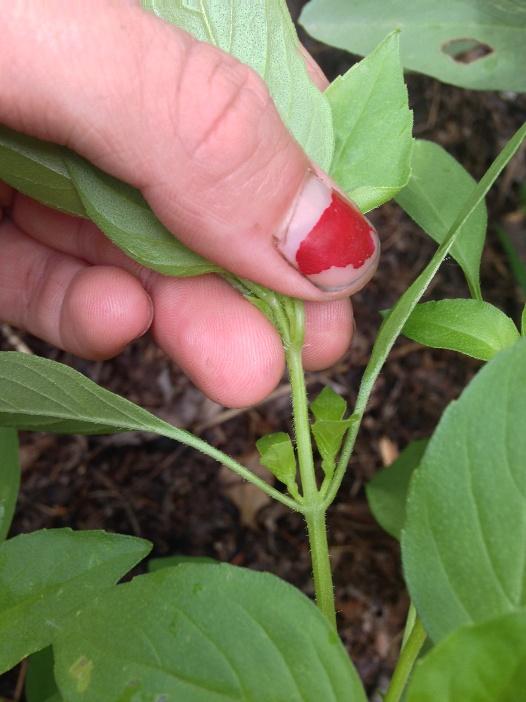
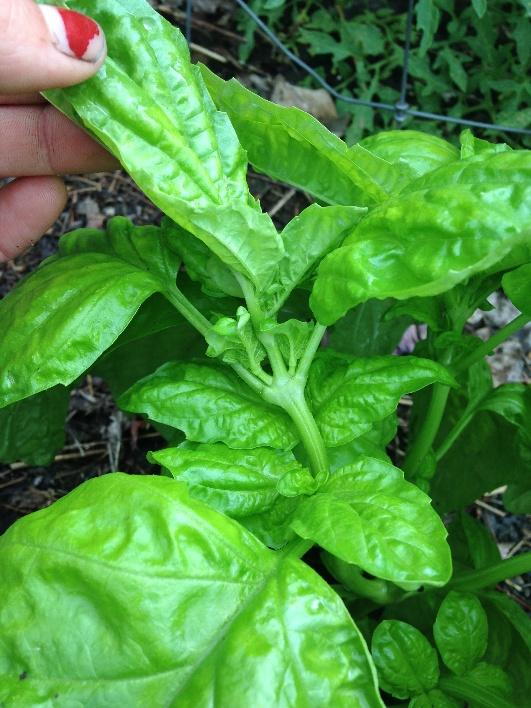
Because basil is in the mint family (aka ‘Lamiaceae’) you should always be harvesting and pruning down the stem near where the leaves branch out. Start at the top of the plant and look down the stem to where the leaves branch off, and if there are two smaller leaves that have formed against the stem.
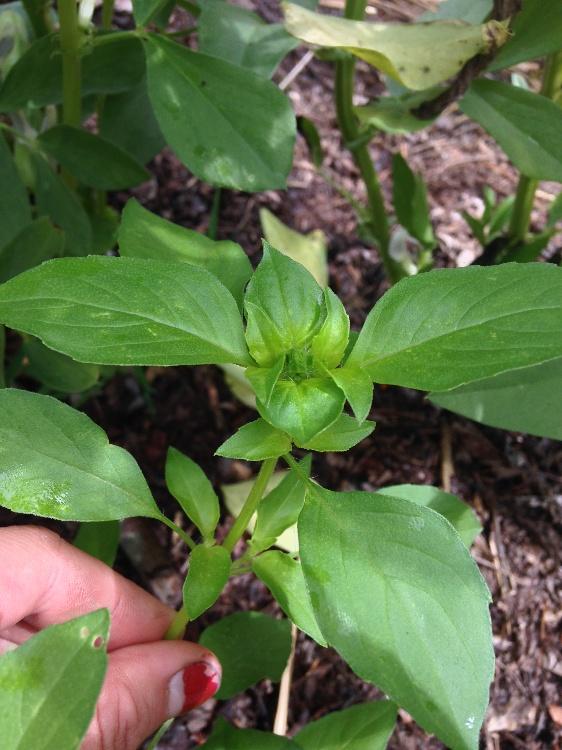
A lemon basil (L) and a leaf lettuce basil (R) showing the smaller leaves you should look for when pruning.
This is where you will want to pinch or snip! Always snip off the stem about a quarter of an inch above your two little leaves! By cutting there you will be sending more energy to those smaller leaves which will grow larger and produce more basil! You can go as far down the stem as you want, as long as there are those smaller leaves between the branches and stem. If there are none, worry not! Your basil plant just needs some more time to soak up those nutrients and grow- your patience will be rewarded.
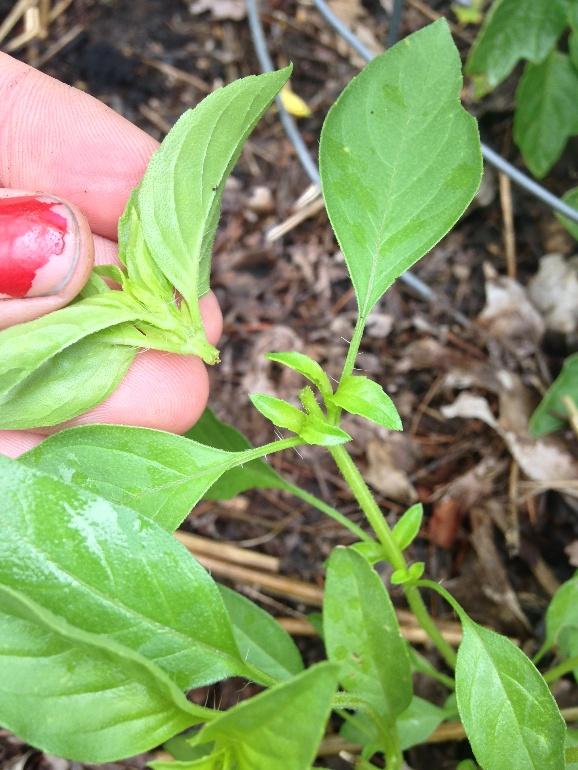
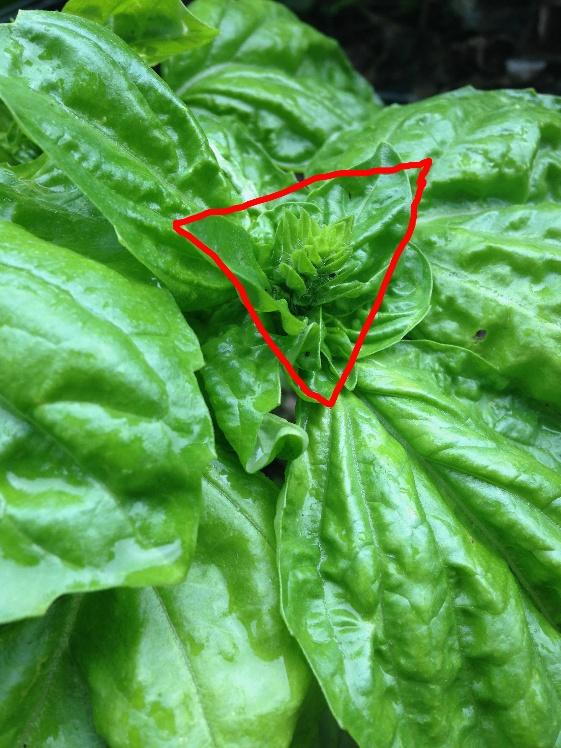
By harvesting and pruning regularly you will avoid having your basil start bolting and producing seeds. When the plant starts to produce seeds, it will start to grow small leaves in a pyramid shape upwards, and will cause the other larger leaves to develop a bitter taste. Not at all what you would want for your Italian or South Asian meals! To remove the bolting part, simply snip off the little pyramid bundle and prune down the stem a branch or two.
What new growth will look like if harvested correctly (L). A bolting basil will form lots of little leaves in a pyramid shape (R), which will go to seed and change the taste of the leaves.
Monday, May 18, 2015
Companion Planting
Ever had a friend who brought out the best in you? It turns out, plants have those friends too!
It's called companion planting - and it happens when two plants provide some benefit to each other when planted together. The benefits can range from pest control to improved taste, from helping counter soil disease to providing a place to trellis.
Take the classic example of 3 Sisters - corn, beans and squash!
As the corn grows tall, the pole beans trellis up its stalk, providing support they need to grow. At the same time, the beans fix nitrogen into the soil, which the corn needs large quantities of to stay healthy. And finally, the squash vines its giant leaves around the base of the corn and the beans, creating a living mulch to keep moisture in the ground and out-compete weeds.
The 3 Sisters are just one companion system though - there are many more!
Tomatoes and marigolds, carrots and onions, cucumbers and nasturtiums...
To learn more about all of these plant companions, click here!
Wednesday, May 6, 2015
Garden Fresh Pesto
Pesto is
a delicious and versatile way to pack in tons of greens in one meal. There's no need to wait for basil season, you can
make pesto with all kinds of greens and fresh herbs. Use pine nuts,
sunflower seeds, walnuts or no nuts. Go vegan, and omit the cheese! Make a big batch during the summer and freeze it for a lovely hit of green in
the dead of winter. Here are some recipes,
but feel free to experiment. This week in the pantry, our pesto features chives, baby spinach and kale leaves, freshly harvested from the Hub Gardens.
Monday, April 27, 2015
Time to Get Growing!
These sugar snap peas, lettuce, flower and broccoli plants are all loving
this beautiful spring weather, and so are we!
Looking to add some garden time to your life?
Click here to learn more about where our gardens are located,
how to get involved, and why we love to grow food so much!
Monday, April 6, 2015
Healthy Soil, Happy Plants
Ever wonder what makes a plant grow beautifully in one place and terribly in another? Look no further than the ground beneath your feet! For healthy plants, there's no better place to start than healthy soil.

While we often think of soil health as what nutrients are present - for example, nitrogen, potassium, or phosphorous - it turns out there's a bigger picture. The truth is, most plants can't even soak up those nutrients without help from microorganisms. And so, introducing... bacteria and fungi!
Here are the basics of how it works... Bacteria and fungi in the soil munch on nutrients, digest them, and then spit them back into the soil. Once the nutrients have been digested, they're in the right form for your plant's roots to take them up. Long story short? Without microorganisms to help break down nutrients, even heavily fertilized soil won't help your plants stay healthy.
So what's the good news? These fungi and bacteria are naturally present in all soil! Additionally, the practices we use in the garden can greatly influence their numbers for better or worse, so below are some tips to keep your soil in good shape.
Simple Tips for Soil Health
- Avoid Tilling! Tilling works like a blender on your soil's microorganisms - it chops them up, which is bad for nutrient breakdown business.
- Broadfork! Broadforking is a gentler way to break up your soil than tilling. It lets air into the soil, which bacteria, fungi and plants need, but doesn't overly disrupt or blend microorganisms like tilling.
- Utilize Compost! Good compost is a perfect breeding ground for healthy bacteria and fungi, so when you put it on your soil, it works like an inoculant, helping to boost their numbers.
- Use Cover Crops! This system of keeping plants in the soil helps keep your microorganisms happy even in the winter by providing food as they break down and by keeping the soil aerated with their roots systems.
- Avoid fungicides and pesticides! These chemicals can outright kill your soil microorganisms, even if they're designed to combat fungal or bacterial diseases. So unless it's absolutely necessary, avoid using them!
- Watch your watering! Soil microorganisms thrive in damp, but not overly wet environments. Aim for the wetness level of a wrung out sponge.
Looking for more in-depth resources? Check these websites!
Subscribe to:
Comments (Atom)